
When guests stay over, the guest bathroom suddenly gets used a lot more: back-to-back showers, wet feet, and people who aren’t used to the space. The right shower floor tile gives you a better grip underfoot, helps water flow to the drain, and makes the room look finished and welcoming.
A good guest bathroom is one your visitors don’t have to think twice about. Below, we’ll walk you through what sets a shower floor apart from the rest of the room, how tile size and grout lines help with footing, and which materials and finishes work best in wet areas. We’ll also show how to coordinate the floor with your walls, and then share a few favorites from our collection.
Planning a bathroom update? Schedule an appointment with one of our tile experts to talk through options for your space.
Why Shower Floors Need Different Tile
A tile that works beautifully on a bathroom floor or wall isn’t always right for the shower. A shower floor works harder than almost any other surface and deals with three things most surfaces don’t:
- Standing water. Any low spot or uneven tile lets water pool instead of draining.
- A built-in slope. Shower floors are built with a gentle pitch toward the drain. Your tile needs to follow that slope without lifted edges or uneven spots.
- Bare, soapy feet. Traction matters more here than anywhere else in your home.
Think of tile as the finish, not the foundation. The real work of moving water happens underneath, where the floor slopes toward the drain and is sealed against leaks. Our guide to preparing your substrate and subfloor for tile walks you through it.
How Tile Size Affects Grip and Drainage
Tile size changes two things on a shower floor: how much grip you get underfoot, and how easily the tile follows the slope to the drain. In general, the smaller the tile, the more grout lines you get, and those grout lines add traction.
| Tile Size | Mosaics (2″ and under) | Medium Tile (4″–12″) | Large Format (12″+) |
| Grip | Excellent. The many grout lines create natural texture underfoot. | Good, as long as you choose a matte or textured finish. | Depends almost entirely on the finish, since there are few grout lines. |
| Drainage | Small pieces bend easily with the slope, so water flows to the drain without pooling. | Works best with a linear drain, which slopes the floor in one direction. | Needs a linear drain and very precise installation to slope correctly. |
| Cleaning | More grout to maintain | Moderate grout | Fewest grout lines to clean |
| Best for | Almost any shower, especially ones with a center drain | Walk-in showers with a linear drain | Curbless or spa-style showers |
Pro Tip: Planning to use large-format tiles? Be sure to discuss installing a linear drain with your contractor beforehand. Standard center drains require the floor to slope inward from all four sides like a shallow bowl, forcing larger tiles to be cut. A linear drain slopes the floor in one direction instead, so larger tiles can lie flat.
Materials and Finishes That Work in Wet Areas
Porcelain is our top choice for most shower floor tiles. It’s dense, absorbs very little water, and comes in looks that range from marble and limestone to concrete and wood.
Ceramic works well in mosaic formats when it’s glazed and rated for floor use.
Natural stone brings one-of-a-kind variation, but it needs regular sealing, and some stones can etch from acidic cleaners. If you love the real thing, choose a honed finish (smooth and matte rather than shiny) and plan for the upkeep.
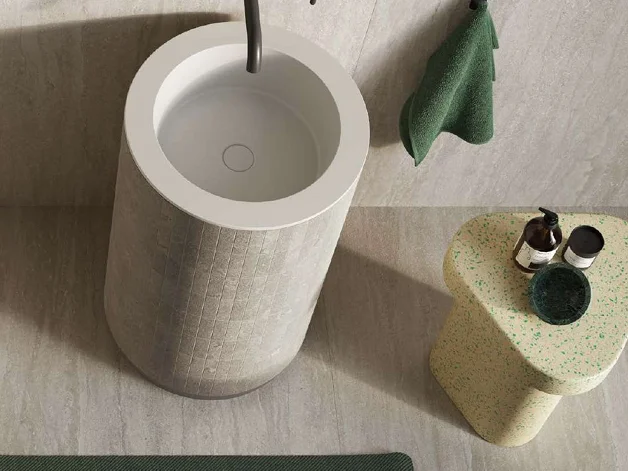
Finish matters as much as material. Matte, honed, and textured finishes give bare feet more grip, while polished, high-gloss tile belongs on the walls. Dorset by Italgraniti is a good example of a tile that balances style and grip: it brings a calm limestone look and comes in an anti-slip finish made for wet floors. Our guide to tile finishes breaks down every option.
When you compare slip-resistant tile, ask about its wet DCOF rating. It measures how much grip a tile has when wet. The rating is based on a Tile Council of North America standard, and our team can walk you through the numbers for any tile you’re considering.
Skip these on a shower floor:
- Polished or high-gloss finishes
- Glass tile, unless it’s specifically rated for wet floors
- Large tiles in a shower with a center drain
- Soft or porous stone if you aren’t prepared to seal it regularly
Coordinating Shower Floor and Wall Tile
The best showers feel like one complete design, not a mix of tiles that happen to sit side by side. One of the easiest ways to pull the room together is to pick a collection that comes in both large tiles and mosaics.
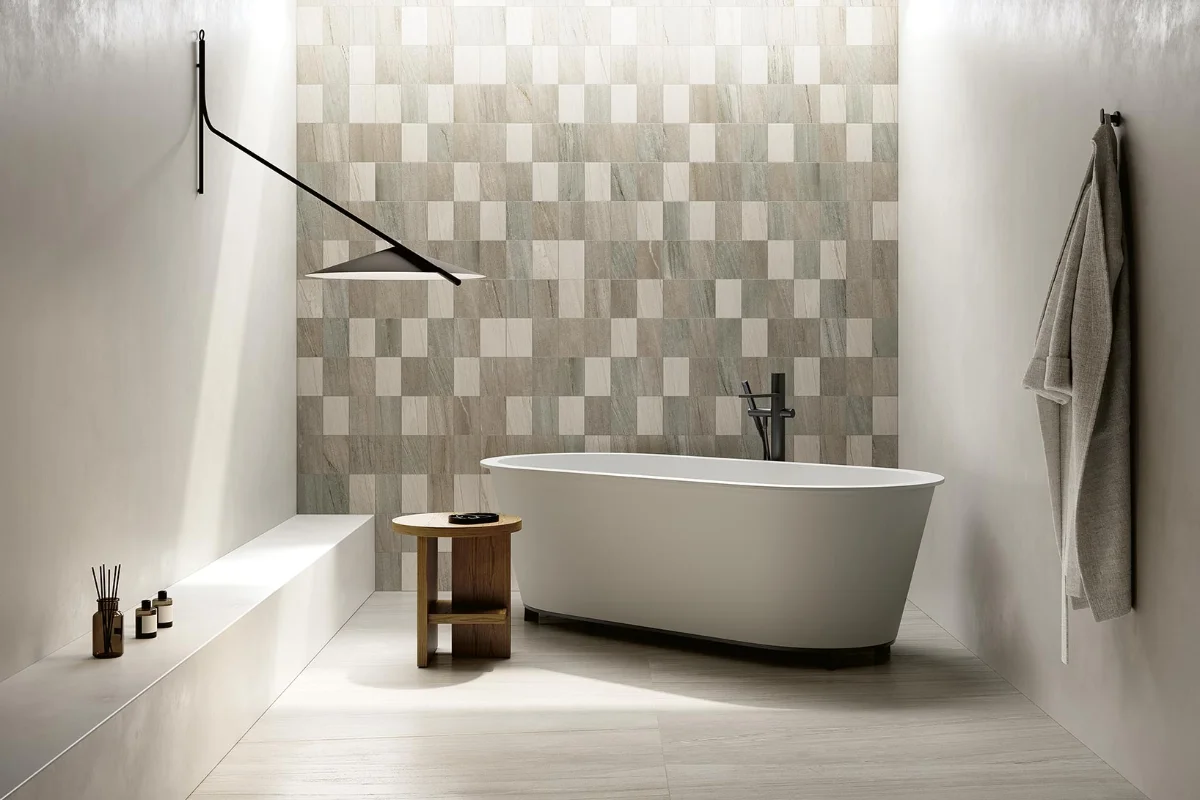
Crystal by Coem is a great example. Use its quartzite-look large-format tiles on the walls and 2×2 mosaics on the floor, and let the soft blue, green, and gold veining carry through the whole shower.
Other ways to tie the space together:
- Same color, different texture. Pair smooth walls with a textured floor in the same tone. Frammenta by Fioranese has a pebbly stone-inspired Palladian mosaic that adds texture and grip at the same time.
- Contrast on purpose. A darker floor under lighter walls grounds the space and hides wear spots.
- Repeat your grout. The same grout color on the floor and walls makes the shower feel cohesive.
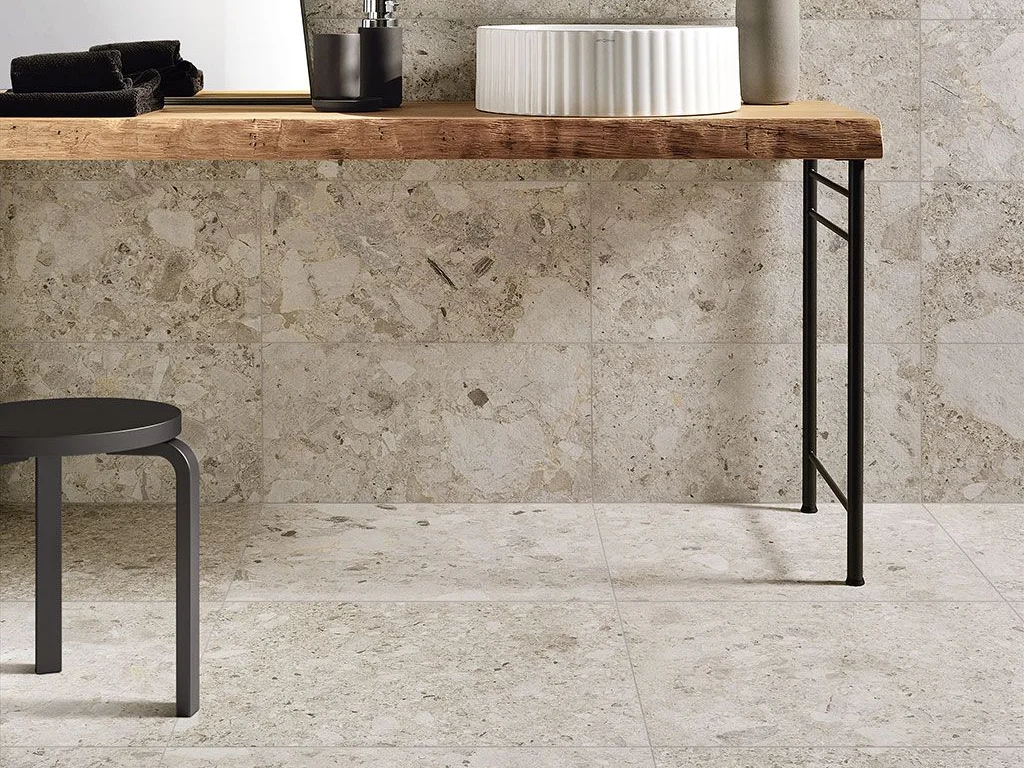
Looking for more inspiration? Browse our tile shower ideas, our 5 home spa ideas, or our full stone-look collection. Houzz also has a helpful list of tips for choosing shower tile.
Shower Niche Tile: Small Space, Big Impact
A shower niche is a small shelf built right into the shower wall. Instead of sticking out like a caddy or corner shelf, it sits inside the wall, so shampoo, soap, and razors have their own spot to stay out of the way.
Here’s how to get the most out of your shower niche tile:
- Match it to your walls for a seamless look
- Accent it with your floor mosaic to connect the niche to the floor
- Slope the bottom slightly so water runs out instead of pooling
- Finish the edges with trim pieces for a clean line
Shower Floor Tile We Love at Tile X Design
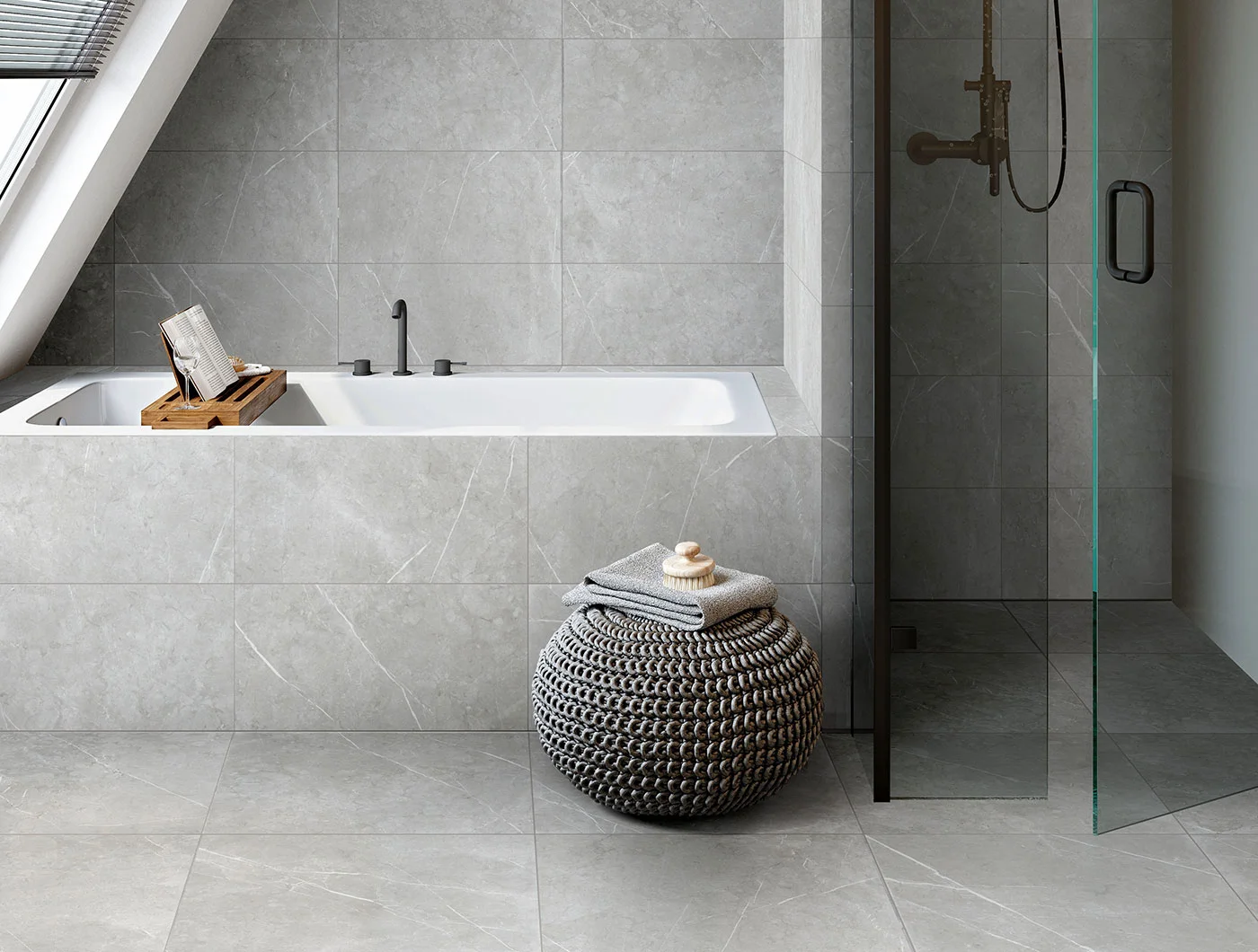
Classica by Ceramica Magica gives you the look of 12 classic marbles, from Carrara to Nero Marquina, in matte porcelain that doesn’t need sealing. Its 2×2 mosaics work well on a shower floor, and the octagon and dot pieces add old-world charm.
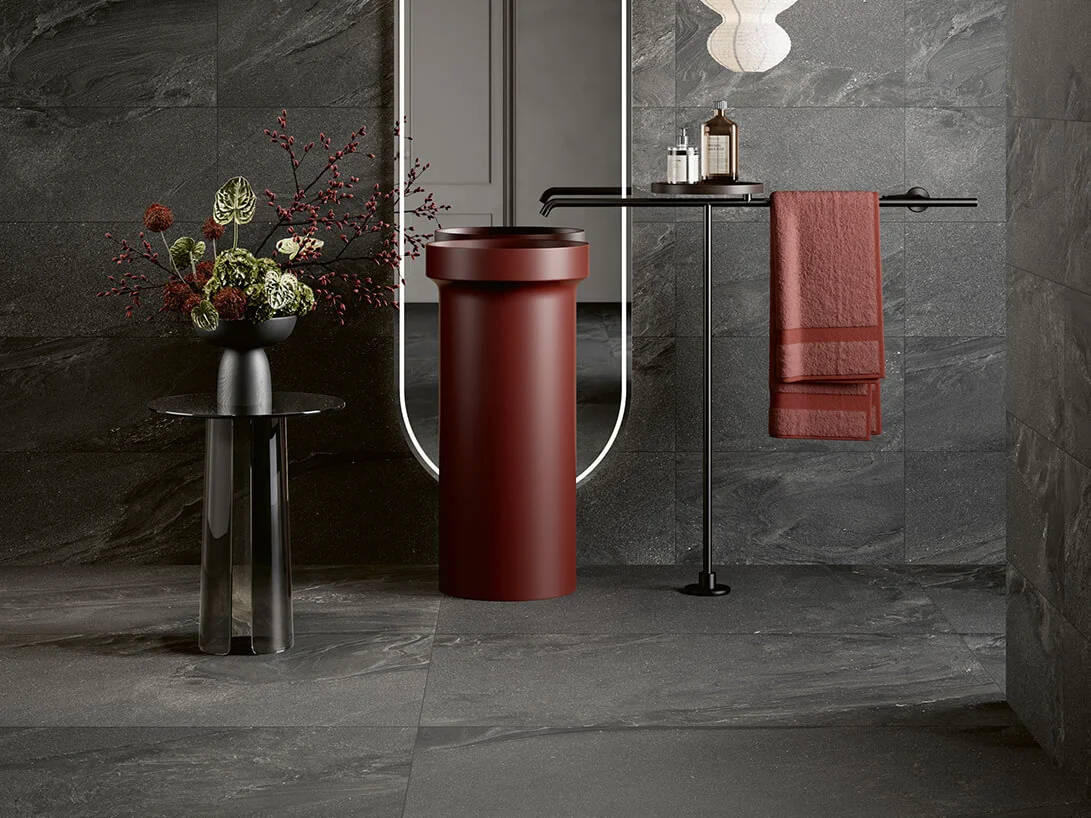
Fluida by Coem has a softly brushed sandstone look with a calm, even tone. Use the large formats on the walls and the 2×2 mosaic on the floor for a shower that feels like one continuous space.
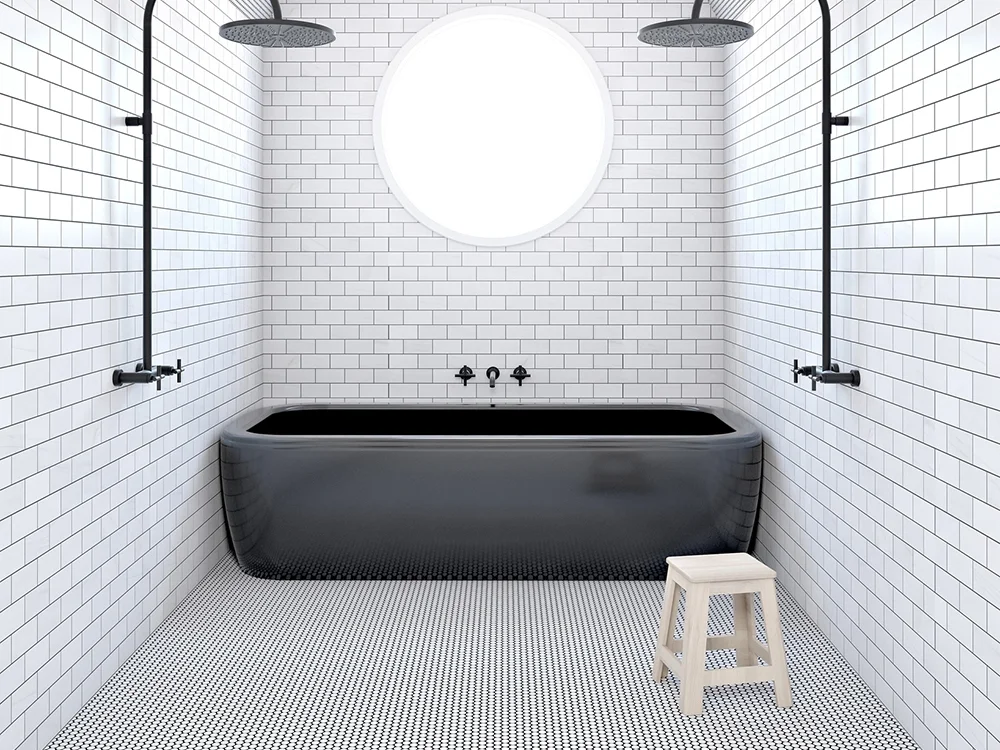
Penny Round Mosaic by Marble Systems is a timeless pick for shower floors. The small rounds follow the slope to the drain easily, and the matte white or black options pair with almost any wall tile.
Browse our full shower floor tile collection for more options.
Keep Your Shower Floor Looking Great Between Guests
Shower floor tile doesn’t need much attention, but these simple steps will protect your grout, tile, and investment:
- Squeegee or towel off the floor after use to cut down on soap scum and mineral buildup
- Use pH-neutral cleaners, especially on natural stone, and skip vinegar and harsh acids
- Seal grout and natural stone as recommended by the manufacturer
- Keep the drain clear so water doesn’t sit on the surface
- Repair cracked grout early to keep moisture out of the shower base
Planning to install your shower floor yourself? Our guide to DIY vs. professional tile installation can help you decide. The shower floor is one of the places where expert installation pays off most.
Build a Better Shower Floor with Tile X Design
The best way to choose shower tile is to feel it for yourself. Visit our Plymouth showroom to compare options in person, and our team will help you find a finish that grips well and looks great. You can also request tile samples to test at home or browse our full shower floor tile collection. Have questions? Schedule an appointment with one of our tile experts.