
Natural stone brings a distinctive look and feel to your space. The color variations, markings, and unique textures are difficult to replicate in manmade tile. However, choosing tile comes down to more than appearances. Natural stone tile is a great choice for floors and walls, but it’s important to consider its maintenance and installation requirements when designing your space.
If you’re considering stone tile for your home, this guide covers the types, how to care for them, what to know about installation, and when to consider other types of tile.
Types of Stone Tile
Stone tile comes in a variety of finishes, shapes, and colors. Here are a few of the most popular materials to consider when planning your space.
Slate Tile
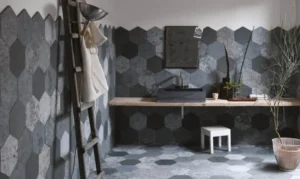
Slate has a distinctive layered appearance that adds texture and depth to a space. It can range in color from soft gray to charcoal or even black. Depending on the finish, it can look raw and organic or honed and smooth.
Slate floor tile is a popular option because of the stone’s durability, but you can also use it for walls and backsplashes, as shown above. Stone by Artesia features slate and limestone in rectangles or hexagons across a range of gray, beige, and black shades.

Travertine Tile
Travertine is a specific type of limestone tile with naturally occurring pits and markings on the surface of the stone. Because these pits can trap debris and are difficult to clean, manufacturers usually fill the markings in travertine floor tile with resin. This creates a smoother surface that’s easier to clean, without sacrificing the unique appearance of the stone.
However, the finish depends on the application. With options such as Capter 9 Arroyo by Jeffrey Court, the tile is completely unfinished to preserve its natural appearance. These small accent tiles look beautiful when used on an accent wall or backsplash.
Although natural travertine is usually processed to make it smoother, its porous surface is more difficult to clean than other stone materials. For this reason, travertine-look tile is far more common than genuine travertine. Marvel Travertine by Atlas Concorde, pictured above, is an example of travertine-look porcelain tile that captures the essence of natural stone without the upkeep.
Marble Tile
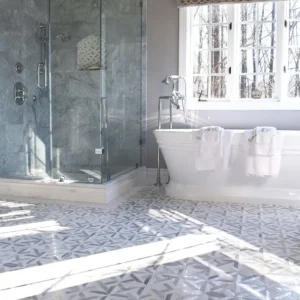
Marble is an iconic stone with veining and natural color variation, making it a popular option for bathrooms, backsplashes, and feature walls. Like any stone, no two pieces are exactly alike. However, marble’s veining makes this natural variation more distinctive than other types of stone tile.
Marble comes in a wide range of sizes. If you like the look of marble, you can find everything from small mosaics to slabs that cover an entire accent wall. Collections like Talya by Marble Systems, pictured above, feature a wide range of sizes and subtle color variations that you can use to create unique designs.
Marble doesn’t just come in standard shapes either. Options like Marrakesh by Marble Systems feature intricate patterns made from different cuts of marble for a stunning appearance.
Like travertine, keep in mind that some marble options are actually marble-look tile rather than being real stone. Marble-look tile is a great option if you want the appearance, but not the upkeep, of natural stone.
Mixed Stone Tile
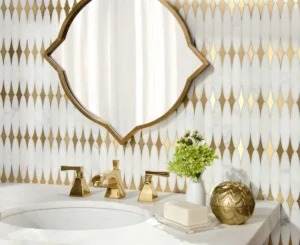
Some stone tile collections feature more than one type of stone within the same design palette. This gives your space a more eclectic, multi-dimensional appearance compared to using the same type of stone throughout. For a rustic and earthy aesthetic, options like Baba Chic by Country Floors feature a beautiful mix of limestone, marble, and other stones in a variety of patterns.
For a more contemporary look, you can also find options that mix natural stone with metallic elements. Trove by New Ravenna, pictured above, features polished brass and aluminum elements inlaid with natural stone to create stunning designs inspired by the night sky.
What to Know About Stone Tile Maintenance
Compared to ceramic and porcelain tile, stone requires more upkeep and maintenance. Before you commit to natural stone, make sure you understand what is involved in protecting its appearance over time.
- Cleaning products. Bleach, vinegar, lemon juice, and other acidic products can etch natural stone, leaving permanent dull marks. You need to buy cleaning products designed specifically for your stone type.
- Sealing. Natural stone usually needs to be sealed to make the surface more resistant to water stains and damage. While sealing keeps out moisture, it doesn’t make stone impervious to stains or harsh chemicals like acidic cleaners.
- Natural wear and tear. Even when using the right cleaning products and sealing natural stone, it can get small scratches, and edges may soften over time. The color may also change subtly with everyday use. Some people like this natural patina, but others don’t.
Get more tips in our guide to cleaning and maintaining tile based on its type.
Budgeting for Natural Stone
Stone tile tends to be more expensive than porcelain and ceramic tile. This is because quarrying and processing stone is much more involved than manufacturing porcelain or ceramic tile. However, it’s not just the cost per square foot. Installing stone tile is more expensive as well.
- You may need additional subfloor preparation to ensure your floors can handle the weight of natural stone and are level enough for installation.
- Depending on the type of tile, you may need to use white thinset instead of standard gray thinset. This is because the gray pigment in standard thinset can shadow or discolor the stone from behind.
- Because of the natural variations, you often need to buy more materials than you actually need. While all tile projects need overages for cuts and broken materials, you may want extra materials to create a layout that balances colors, textures, and patterns.
All of these factors can increase labor costs, so it’s important to plan ahead. Read our guide to creating a tile renovation budget for more tips.
What to Look for When Shopping for Natural Stone
Before committing to a stone, take time to look beyond a single sample. Natural variation is part of the appeal, but it can also mean that you don’t get the full picture from looking at one tile. If possible, look at several tiles from the current production lot, paying attention to differences in color, veining, and texture.
It’s also worth comparing finishes in person. A honed surface feels and looks different from a tumbled or natural-cleft finish, and those differences can affect both the appearance and day-to-day care of your floor.
At Tile X Design, our tile experts are here to help you explore natural stone options, compare finishes, and discuss your project. Seeing materials in person in our tile showroom can help you narrow your choices and find a stone that suits your style and your practical needs. Schedule a consultation with an expert or stop by our showroom in Plymouth to start designing your space!